KakaoTalk (카카오톡) is a South Korean instant messaging and calling application developed by Kakao Corporation, launched in March 2010. It is the dominant messaging platform in South Korea, used by over 90% of the country’s smartphone users as the primary channel for personal, professional, and commercial communication. KakaoTalk is available on iOS, Android, Windows, and macOS, and offers free voice calls, video calls, group chats, file sharing, and a rich sticker and emoji ecosystem. Beyond messaging, KakaoTalk serves as the login gateway for the broader Kakao ecosystem — including KakaoBank (South Korea’s largest internet-only bank), KakaoPay (a major mobile payment platform), Kakao Games, KakaoMap, and KakaoTaxi. The app is widely used not only in South Korea but among the Korean diaspora in the United States, Canada, Australia, and other countries.
When registering a KakaoTalk account, a phone number is required as the primary account identifier and a verification code is sent before the account is activated. KakaoTalk checks the carrier type of the submitted number before dispatching any OTP, blocking VoIP numbers at this step. If you want to register KakaoTalk without your personal phone number — for privacy when communicating with Korean contacts, to keep your personal number off a platform connected to banking and payment services, or to use a separate number for the Kakao ecosystem — a real non-VoIP US carrier number from TextVerify.io passes this check and delivers the code to a private inbox only you can access.
Why KakaoTalk Requires Phone Verification
KakaoTalk’s phone verification is tied to its role as South Korea’s primary digital communication and financial services platform:
| Phone number as primary account identity. KakaoTalk uses your phone number as the unique identifier for your account, the same way WhatsApp and Signal do. Other KakaoTalk users find you and add you as a contact through your phone number. Verifying ownership of the number at registration confirms that you control the identity being used as your KakaoTalk address. This verification step is the foundation of the contact-discovery system that powers the app’s social graph in South Korea. |
| KakaoPay and KakaoBank compliance. A KakaoTalk account is the login credential for KakaoPay (a regulated mobile payment service) and KakaoBank (a licensed internet-only bank regulated by the Financial Services Commission of South Korea). Both services are subject to South Korean financial regulations requiring real identity verification. Phone verification at the KakaoTalk account level supports the compliance requirements of the downstream financial services tied to the same Kakao ID. |
| Spam and fake account prevention. KakaoTalk is the primary communication channel in South Korea and is a frequent target of spam, phishing, and fraud campaigns. Requiring a real carrier number for registration raises the cost and difficulty of creating fake accounts in bulk. VoIP numbers can be provisioned at scale for almost nothing, making their exclusion a key measure against automated spam account creation on the platform. |
| Kakao ecosystem security. KakaoTalk is the single login gateway for a large ecosystem including games, shopping, maps, taxi, news, and financial services. Securing the account registration step protects access to all downstream Kakao services tied to the same Kakao ID. A compromised registration code could give unauthorized access to the full Kakao account ecosystem, not just the messaging app. |
| Communication and financial privacy. KakaoTalk handles personal and professional messaging alongside payment and banking activity for millions of users. Keeping your personal phone number off the KakaoTalk account limits the personal contact information stored alongside your communication history and any financial transactions processed through the Kakao ecosystem. |
What Does Not Work
These alternatives fail at KakaoTalk’s carrier validation step:
| Google Voice. VoIP. KakaoTalk identifies internet-routed numbers and rejects them before any OTP is sent. Given that a KakaoTalk account connects to KakaoPay and KakaoBank, its carrier filtering is applied at a level consistent with financial services identity verification. |
| TextNow, Hushed, 2ndLine, Sideline, Burner. All VoIP. App-based internet numbers are flagged and rejected at the carrier check. These are the same types of numbers Kakao’s verification system is specifically designed to block at the registration gate. |
| Free public SMS websites. Blocked by KakaoTalk and a security risk for any account with financial services connections. If anyone intercepts the OTP from a public page, they can complete KakaoTalk registration and access the full Kakao ecosystem including any linked KakaoPay wallet. |
| Non-US numbers for US-based registration. If you are registering from the United States, entering a foreign or international VoIP number in the phone field will not pass the carrier check. TextVerify provides real US carrier numbers that work for KakaoTalk registration from a US device or IP. |
TextVerify.io numbers are provisioned from real US licensed telecom carrier infrastructure. They pass KakaoTalk’s carrier check as genuine numbers and deliver the OTP to a private inbox only you can access.
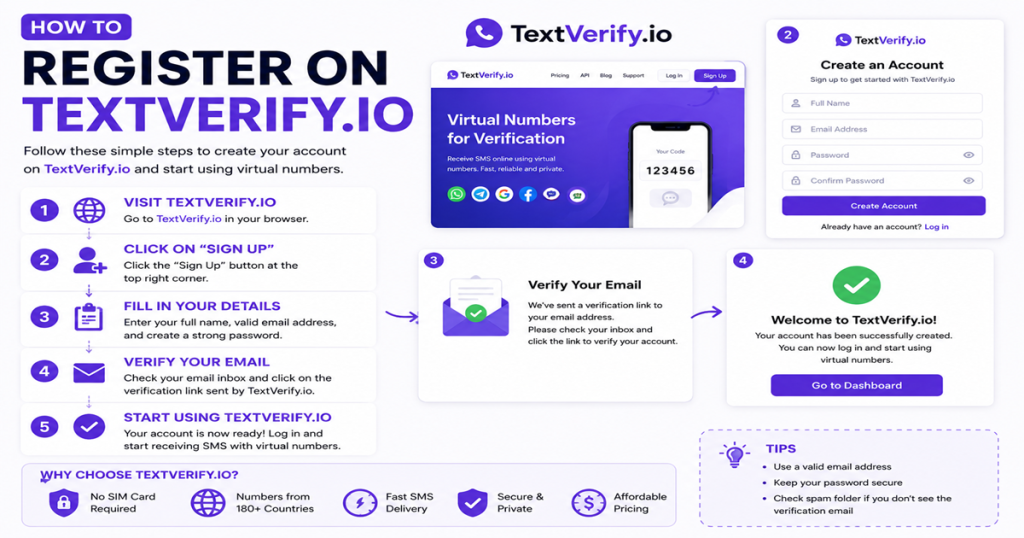
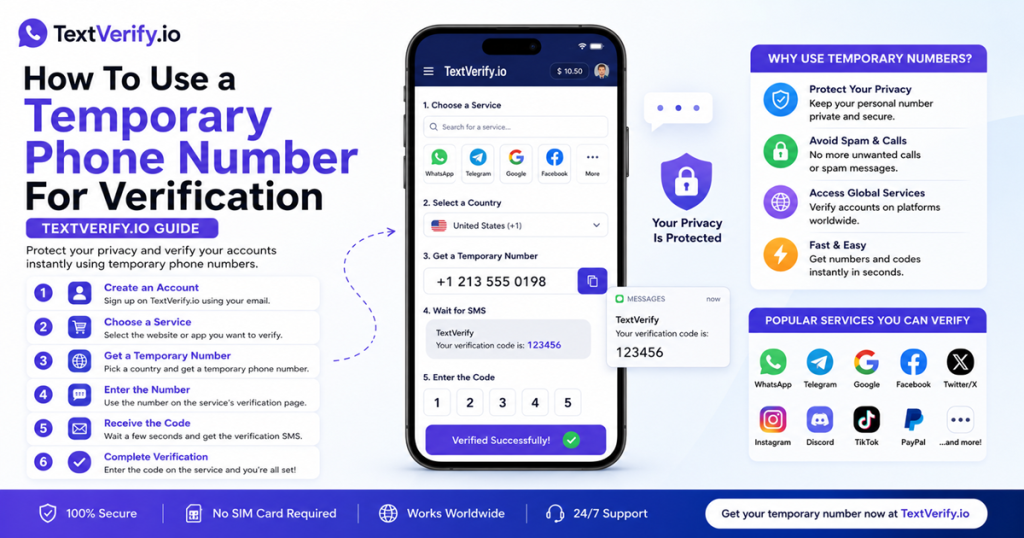
Step-by-Step Guide
Register a KakaoTalk account without your personal phone number:
Common Mistakes to Avoid
- Using a VoIP number. KakaoTalk checks carrier type at registration and rejects all VoIP numbers before any code is sent. Only a real US carrier number from TextVerify passes this check.
- Using a public SMS inbox on an account connected to financial services. A KakaoTalk account is the login gateway for KakaoPay and KakaoBank. Anyone intercepting an OTP from a public page could complete registration and access the full Kakao ecosystem including linked financial services. TextVerify’s private inbox is the only safe option.
- Not opening TextVerify before requesting the code. KakaoTalk’s OTP expires quickly. Have your TextVerify inbox open before tapping Get Code so you can paste the verification code without delay.
- Not adding an email backup immediately. KakaoTalk account recovery relies on either the registered phone number or a linked email. Add email backup immediately after registration, before the TextVerify rental expires, so account access is not dependent on the phone number alone.
- Registering the same number on a new device without transferring data. Moving KakaoTalk to a new device without completing the account transfer process first may result in lost chat history. Follow KakaoTalk’s official account transfer process when switching devices, which involves verifying the registered phone number — another reason to keep the number active or update it before device transfer.
Frequently Asked Questions
Bottom line
KakaoTalk uses your phone number as the account identifier and checks carrier type before sending an OTP, blocking VoIP numbers. TextVerify.io provides real US carrier numbers that pass this check. Enter the number during registration, copy the OTP from your private inbox, confirm it, and add an email backup immediately after registration — especially important given KakaoTalk’s connection to financial services through the Kakao ecosystem.
TextVerify.io
💬 Verify KakaoTalk Without Your Personal Number
Real non-VoIP US numbers · Passes KakaoTalk’s carrier check · Private inbox only you can access
Get Started on TextVerify.io →