Venmo, owned by PayPal, is one of the most widely used peer-to-peer payment apps in the United States. It allows users to send and receive money, split bills, pay for purchases at merchants that accept Venmo, and maintain a balance that can be transferred to a linked bank account or debit card. Because Venmo handles real financial transactions and is subject to financial regulations, it requires a verified phone number when you create an account. Venmo sends a six-digit SMS code to the phone number you enter, and the account remains restricted until the code is confirmed.
Venmo checks the carrier type of the phone number you submit before sending any SMS. Numbers identified as VoIP are rejected before the code is dispatched. To complete Venmo’s verification without using your personal number, TextVerify.io provides real non-VoIP US carrier numbers with private inboxes. Enter the number, receive the Venmo code privately, confirm it, and your account is ready to use.
Why Venmo Requires a Real Carrier Number
Venmo is licensed as a money transmitter in the United States and operates under PayPal’s regulatory framework. Phone verification is a mandatory part of its account creation and security system for several reasons:
| Account sign-up. Venmo asks for a phone number during the initial registration and sends a six-digit SMS code. The app cannot be used to send money, receive money, or link a bank account until this code is entered and confirmed. A verified phone number is required for any account functionality beyond browsing the app interface. |
| New device authorization. When you install Venmo on a new phone or after reinstalling the app, Venmo sends a verification code to the registered phone number to confirm that the person logging in controls the account. This is a security measure that prevents unauthorized device access. If the registered number is unreachable, this step cannot be completed. |
| Sending limit increases. A basic Venmo account has a weekly sending limit of $299.99 for person-to-person payments. To increase this limit and access the full Venmo feature set, Venmo requires identity verification. The phone verification step is the baseline requirement — identity verification builds on top of it. |
| Account recovery. Venmo uses the registered phone number as one of its account recovery options. If you lose access to your email or forget your password, Venmo can send a recovery code to the registered number. A reachable number is important for long-term account access. |
Venmo’s SMS system performs a real-time carrier lookup on every number submitted. VoIP numbers are flagged and rejected. TextVerify numbers come from real US carrier lines and consistently pass this check.
What Does Not Work
These are the most common alternatives people try that fail with Venmo’s phone verification:
| Google Voice. VoIP. Venmo’s carrier check identifies Google Voice immediately and rejects the number before dispatching any SMS. This is the most frequently attempted workaround and it does not work. |
| TextNow, Hushed, 2ndLine, Sideline. All VoIP. App-based numbers operate over internet infrastructure rather than real carrier networks. Venmo, as a regulated payment platform, validates carrier type before sending any code and blocks all VoIP services. |
| Free public SMS sites. Numbers from public SMS receiving websites are on Venmo’s blocklist. These sites also show every incoming message to anyone who visits, meaning your Venmo code would be publicly visible. Venmo blocks these numbers proactively. |
| A number already linked to another Venmo account. Venmo ties each phone number to one account. |
| Non-US numbers. Venmo is only available in the United States and requires a US phone number (+1) for verification. International numbers from other countries are not accepted during Venmo registration. |
TextVerify.io numbers are sourced from real US mobile carrier infrastructure. They pass Venmo’s carrier-type check, and incoming SMS messages appear in a private inbox only visible to your TextVerify account.
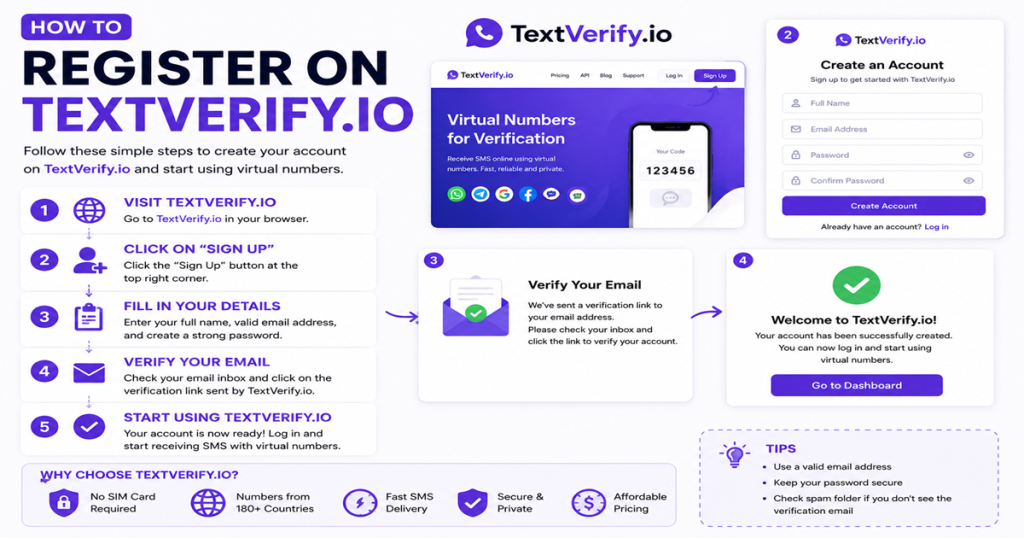
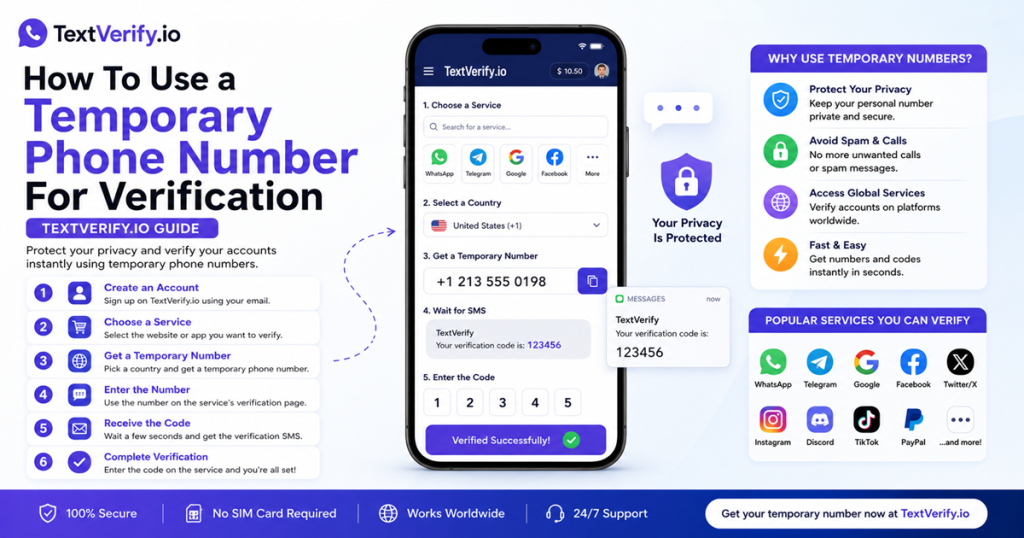
Step-by-Step Guide
Here is how to get a real carrier number and complete Venmo’s phone verification:
Common Mistakes to Avoid
- Using a VoIP number. Venmo’s carrier-type lookup rejects all VoIP numbers before sending any SMS. Google Voice, TextNow, Hushed, 2ndLine, and similar services are blocked at the validation step. Only a real carrier number from TextVerify passes.
- Using a number already registered to another Venmo account. Venmo ties numbers to accounts. A phone number previously used for a Venmo account will be rejected when registering a new one. Use a fresh TextVerify number each time.
- Using a disposable one-time number. Venmo sends a new SMS code every time you log into the app on a new device. A number that expires after the first verification will prevent you from logging in the next time the device authorization code is triggered. A rental number is strongly recommended.
- Letting the rental expire without updating the number. If your TextVerify rental expires and you have not updated the phone number in Venmo’s settings, you will be locked out the next time Venmo sends a device authorization code. Update the number in Venmo’s profile settings before the rental expires.
- Waiting too long to enter the verification code. Venmo’s six-digit codes expire within a few minutes. Have your TextVerify inbox open before tapping “Next” in Venmo so you can retrieve and enter the code immediately.
- Expecting the Venmo Debit Card with phone verification only. The Venmo Debit Card requires identity verification with your legal name, date of birth, and SSN. Phone verification alone does not unlock the debit card. Complete the identity verification step in the Venmo app after account creation to access the card.
Frequently Asked Questions
Bottom line
Venmo requires a real non-VoIP US carrier number for phone verification — VoIP numbers are blocked before any code is dispatched. TextVerify.io provides real carrier numbers that pass Venmo’s check. Get a number, enter it during Venmo registration, retrieve the six-digit code from your private TextVerify inbox, confirm it, and your account is ready. Use a rental number to ensure you can still receive device authorization codes on future logins. Identity verification for higher limits and the Venmo Debit Card is a separate step.
TextVerify.io
💲 Get a Real Number for Venmo Today
Real non-VoIP US numbers · Passes Venmo’s carrier check · Private inbox
Get Started on TextVerify.io →