How to Receive SMS Online for Phone Verification
Free and Paid Options — 2026
Most apps and websites now ask for a phone number before they verify you. Not to call you — just to send one verification code. It’s become the default way to confirm you’re a real person. For most people that’s fine, but handing over a personal number every time you sign up needs a second thought.
This guide covers how to receive SMS online without using your actual SIM, what the real difference is between free and paid options, and how the whole process works.
Why People Look for This
Privacy is the most common reason. Your phone number is linked to your name, your carrier, and sometimes your address. Once a platform has it, they can use it for marketing, pass it to partners, or expose it in a data breach. For a service you’re only trying out, that trade-off doesn’t make sense.
Some people need multiple accounts — work and personal kept separate, testing environments, or running separate business profiles. Each account needs a unique number, and buying extra SIM cards just for that is overkill.
Others are traveling and their home SIM isn’t receiving texts. Some are on tablets or eSIM-only devices with no physical slot. And some just want to test a platform before committing their real contact details. Whatever the situation, a text verification service solves it without needing a second SIM.
Free vs Paid — What You Actually Get
This is where most people get tripped up, so it’s worth being straight about it.
Free “receive SMS online” websites do exist. They give you a shared number and show incoming messages publicly. For old forums or low-security sites, they sometimes work. But for anything that matters — Google, WhatsApp, Telegram, Facebook, Snapchat, banking apps — they don’t. These platforms block the entire number ranges that free services use. The codes just don’t arrive, and when they do, the account gets flagged quickly.
The reason is simple. These numbers have been used by thousands of people. Platforms know this and reject them. If you’ve already tried a free phone number for verification and got nothing, that’s why.
A paid phone SMS verification service works differently. The number is assigned only to you. The inbox is private. You pick the country. Codes arrive in seconds. Pricing is low — often a few cents per verification. If the account means anything to you, the paid route is the only one that consistently works.
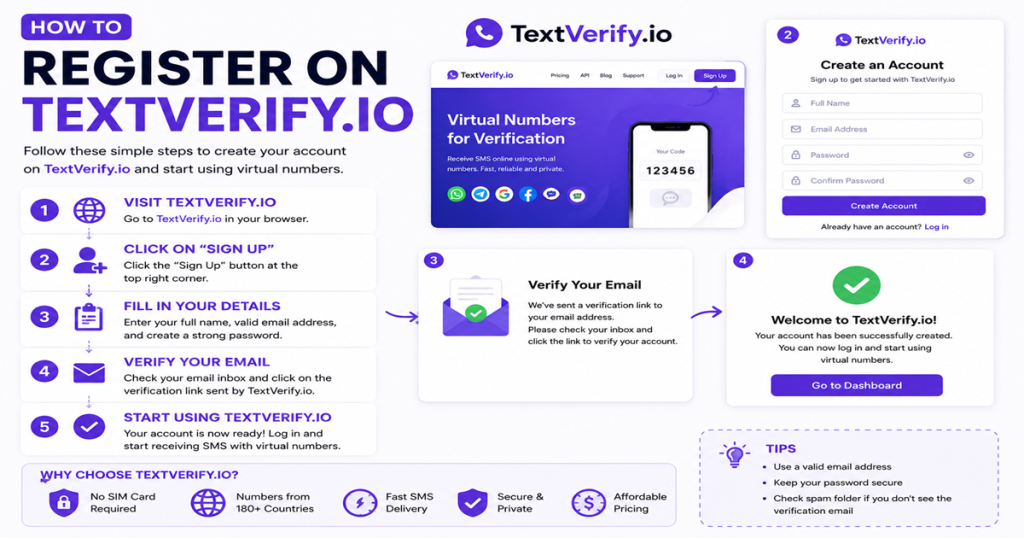
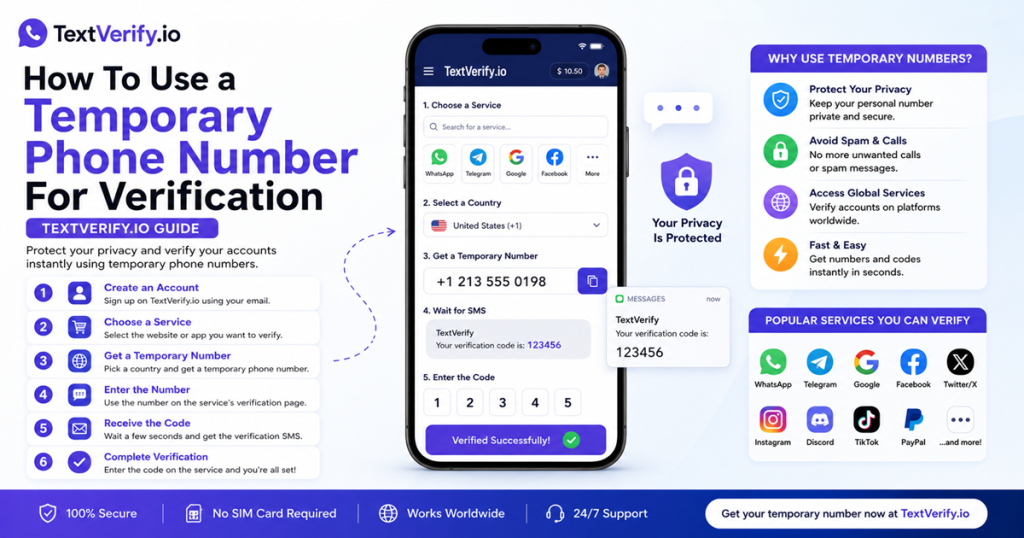
How to Receive SMS Online Using TextVerify
Here’s the process for any platform that requires phone number verification:
- Go to TextVerify and create a free account.
- Search for the service you need to verify.
- Pick a country and get your number. US numbers work for most services.
- Go to the app or website and enter that number where it asks for your phone.
- Request the verification code from the platform.
- Come back to your TextVerify dashboard. The verified SMS appears within seconds.
- Enter the code. You’re in.
That’s the full process. The number you used was a temp phone number for verification — it received the one-time code and that’s all it needed to do. You’re only charged when a message actually delivers, so if the code doesn’t come through, you don’t pay.
Common Mistakes to Avoid
Using a free shared number for anything important. Free public numbers are visible to everyone. If someone else sees the code sent to that number, they can take the account. Don’t use them for email, social media, or anything with personal data attached.
Choosing a one-time number for accounts that re-verify later. Some platforms send another SMS when you log in from a new device. If your number is already gone, you’re locked out with no way back in. For accounts you plan to keep, rent a number instead of using a disposable one.
Requesting the code too late. Most verification codes expire within a few minutes. Get your number, then immediately request the code on the platform. Don’t buy the number and come back an hour later.
Using the same number twice for the same platform. Platforms track this. One number per account is the rule. If you need a second account on the same service, get a fresh number.
FAQ
Is there a free phone number for verification that actually works on Google or WhatsApp?
Honestly, not reliably. Free shared numbers are blocked by Google, WhatsApp, Telegram, and most major platforms. They get rejected before the code even sends. For those services, a paid temporary phone number for verification is the only option that consistently goes through — and it typically costs less than a dollar.
Will the platform know I’m not using a real SIM?
Platforms check whether a number has been overused or flagged, not whether it’s a virtual line. A fresh number from a paid service looks the same to the platform as a regular phone. What gets accounts flagged is behavior — spam, multiple registrations in a short window — not the type of number used.
Can I use one virtual number to verify multiple accounts?
One number, one account per platform. Entering the same number twice for the same service usually gets rejected. Each account needs its own number.
What’s the difference between a temporary phone number for verification and a rented number?
A temporary number is used once. It receives the code, and then it’s done. A rented number stays active for days or weeks — it’s yours the whole time, all incoming messages go to your dashboard. Use temporary for one-shot signups. Use rental for accounts you’ll log into on different devices or that might send a second SMS later.
Is using a virtual number legal?
Yes. A virtual number is a legitimate phone line, just not a physical SIM. Using it to receive a one-time verification SMS is completely legal. The terms of service you agree to are the platform’s own rules about account usage — the same rules that apply to any account.
TextVerify
📬 Receive SMS Online in Seconds
Real carrier numbers · Private inbox · No delivery, no charge