Crypto exchanges require phone verification as a core part of their compliance and security framework. Whether you are signing up on Binance, Coinbase, Kraken, Crypto.com, or any other major exchange, an SMS verification code is sent to your phone number during account creation, and in many cases on every login. This is not optional — exchanges operating under financial regulations use phone verification as the baseline identity check before any trading, depositing, or withdrawing can happen.
The challenge is that most exchanges perform a carrier-type check before sending any SMS. VoIP numbers — Google Voice, TextNow, Hushed, and every app-based phone number — are rejected at this step. A temporary phone number from TextVerify.io is different: it is a real non-VoIP US carrier number with a private inbox. Enter it when the exchange asks for your phone number, receive the SMS code privately, confirm it, and your account creation proceeds without using your personal SIM.
Why Crypto Exchanges Require Phone Verification
Crypto exchanges are regulated financial platforms subject to Anti-Money Laundering (AML) laws, Know Your Customer (KYC) requirements, and financial reporting obligations in the jurisdictions where they operate. Phone verification is a mandated part of these compliance frameworks:
| Account registration. Every major exchange requires a phone number during sign-up. An SMS code is sent to the number you provide, and you cannot proceed to deposit funds, buy crypto, or trade until the code is confirmed. This applies to Binance, Coinbase, Kraken, Crypto.com, Gemini, and most other regulated exchanges. |
| Two-factor authentication (2FA) on logins. Crypto exchanges handle high-value assets and enforce 2FA by default. When you log in from a new device or browser, the exchange sends a verification code to your registered phone number. Without a reachable number, login on a new device is blocked. Many exchanges also support authenticator apps (Google Authenticator, Authy) as a 2FA alternative after the initial phone verification is done. |
| Withdrawal and transfer confirmations. For large withdrawals or when adding a new withdrawal address, many exchanges send an SMS confirmation code to the registered phone number as an additional security step. This prevents unauthorized withdrawals even if the account password is compromised. |
| KYC identity tier upgrades. Most exchanges have tiered account levels with different deposit, trading, and withdrawal limits. A phone-verified account has basic access. To increase limits and pass higher KYC tiers, the exchange requires additional identity documents (government ID, proof of address, selfie verification). Phone verification is the first required step before any KYC documents can be submitted. |
All major exchanges perform a real-time carrier lookup before sending any SMS. Numbers identified as VoIP are rejected without any code being dispatched. TextVerify numbers originate from real US carrier infrastructure and consistently pass this check.
What Does Not Work
These are the most common options people try that fail with crypto exchange phone verification:
| Google Voice. VoIP. Crypto exchanges apply strict carrier checks and Google Voice is one of the first VoIP types they block. No code is sent — the number is rejected at validation. |
| TextNow, Hushed, 2ndLine, Sideline. All VoIP. App-based phone numbers route over internet infrastructure rather than real carrier networks. As financial platforms handling large sums of crypto assets, exchanges apply among the strictest carrier validation in the industry. All VoIP services are blocked. |
| Free public SMS receiving websites. Numbers from public SMS sites are on every major exchange’s blocklist. These sites also show all incoming messages to anyone who visits — making your verification code publicly visible, which is a serious security risk for an account holding crypto assets. |
| A number already registered on the same exchange. Exchanges tie phone numbers to accounts for fraud prevention. A number already used on a Coinbase, Binance, or other exchange account cannot be used to register a new account on the same platform. Use a fresh TextVerify number for each new exchange account. |
TextVerify.io provides numbers from real US mobile carrier lines. They pass crypto exchange carrier validation, and the verification SMS arrives in a private inbox only visible to your TextVerify account.
Step-by-Step Guide
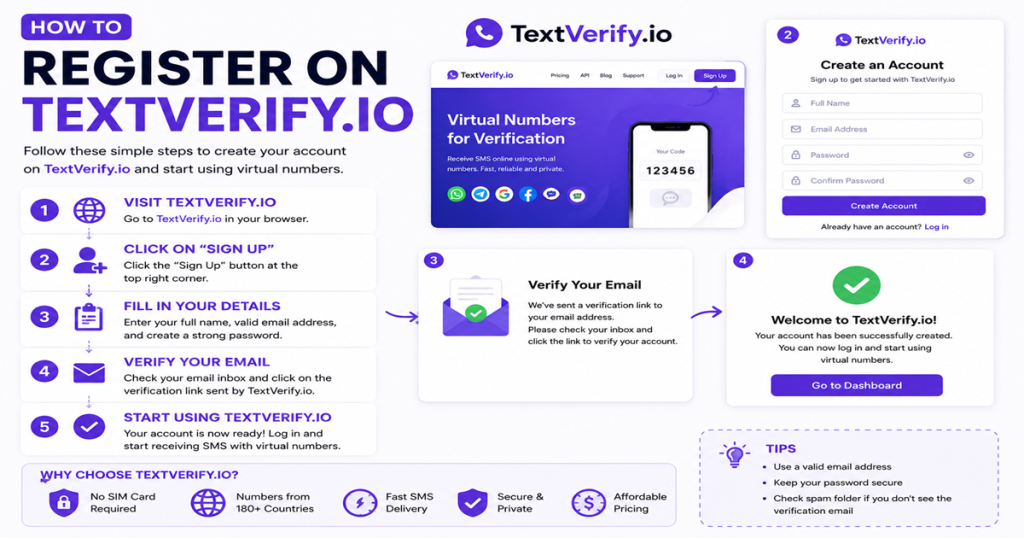
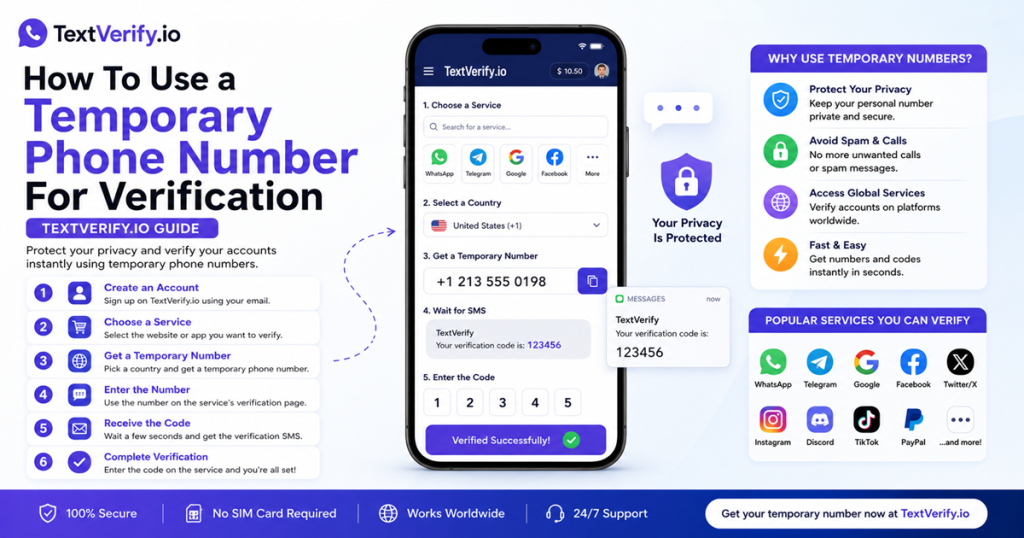
Here is how to get a temp phone number and complete crypto exchange verification:
Major Exchanges and Their SMS Requirements
Here is how phone verification works on the most widely used crypto exchanges:
| Binance. Requires phone or email verification during registration. Phone verification unlocks basic trading. Full withdrawal access requires KYC with government ID. Binance also uses SMS for withdrawal confirmations when SMS 2FA is active. Carrier check is strict — VoIP blocked. TextVerify carrier numbers work. |
| Coinbase. Requires phone verification during account setup. Coinbase sends a six-digit SMS code and uses the number for 2FA on every login unless you switch to an authenticator app. KYC for US users includes SSN and government ID. VoIP numbers are blocked at validation. TextVerify carrier numbers pass. |
| Kraken. Requires phone number during registration and uses it for 2FA. Kraken enforces strict carrier validation. After registration, Kraken allows switching to a hardware key or TOTP authenticator app for 2FA, removing the SMS dependency. VoIP blocked. TextVerify carrier numbers work. |
| Crypto.com. Requires phone number during account creation for SMS verification. Crypto.com sends a six-digit code and verifies the carrier type before dispatching. The app also uses SMS for confirming large transactions. KYC for full features requires government ID and selfie. VoIP blocked. TextVerify carrier numbers pass. |
| Gemini. Requires phone verification during sign-up and enforces SMS-based 2FA by default. Gemini allows switching to an authenticator app after account creation. Gemini is a US-regulated exchange with strict KYC including SSN for US users. VoIP blocked. TextVerify carrier numbers work for the SMS verification step. |
Frequently Asked Questions
Bottom line
Crypto exchanges block VoIP numbers at carrier validation before any SMS is sent. TextVerify.io provides real US carrier numbers that pass this check on Binance, Coinbase, Kraken, Crypto.com, Gemini, and other major exchanges. Get the number, enter it during exchange registration, retrieve the code from your private TextVerify inbox, and confirm it. After setup, switch 2FA to an authenticator app — it removes the SMS dependency and is a security best practice. Full trading and withdrawal access requires separate KYC document verification.
TextVerify.io
🪙 Get Your Crypto Exchange Verified Today
Real non-VoIP US numbers · Works on Binance, Coinbase, Kraken & more · Private inbox
Get Started on TextVerify.io →