Remitly is an international money transfer app founded in 2011 and headquartered in Seattle, Washington. The platform specializes in digital remittances — transfers from individuals in developed countries to family members or recipients in developing markets — and operates in over 170 countries, covering more than 1,500 sending corridors. Remitly allows users to send money from the United States, Canada, the United Kingdom, Australia, and other high-income countries to recipients in Latin America, Southeast Asia, South Asia, Africa, and other regions. Recipients can receive funds as a bank deposit, mobile money credit, home delivery (in select markets), or cash pickup at a Remitly agent location or partner bank. Transfers on Remitly can be funded by bank account (ACH), debit card, or credit card. Remitly is registered with FinCEN as a licensed money services business in the United States and holds equivalent licenses in its other operating jurisdictions. The platform has processed tens of billions of dollars in transfers since launch and serves millions of customers globally.
Remitly requires phone number verification as part of its account registration process. As a licensed money services business subject to AML (Anti-Money Laundering) and KYC (Know Your Customer) regulations, Remitly is required to verify the identity of senders before processing money transfers. Phone verification is part of Remitly’s registration security process alongside name, address, date of birth, and in some cases government identity document verification for larger or higher-frequency transfers. Remitly’s system sends a one-time code by SMS and validates the number against carrier databases — rejecting VoIP and internet-routed numbers that do not appear as real mobile lines. If you want to register on Remitly without exposing your personal carrier number — for privacy or account management reasons — a real non-VoIP US carrier number from TextVerify.io passes Remitly’s carrier validation and delivers the OTP to a private inbox only you can access.
Why Remitly Requires Phone Verification
Remitly uses phone verification as part of its regulated AML compliance and account security process:
| AML and MSB regulatory compliance. Remitly is licensed as a money services business in the United States and holds equivalent licenses in every country where it operates. These licenses require Remitly to verify sender identity before processing international money transfers. Phone verification is part of the sender identity layer alongside name, address, date of birth, and government ID verification for larger transfers — ensuring Remitly can link each transfer to a verifiable sender identity, as required by FinCEN and equivalent regulators in other jurisdictions. |
| Fraud prevention on an international transfer platform. Remitly processes high volumes of cross-border transfers across dozens of corridors and is a target for fraudsters attempting to send money through accounts created with false identities. Phone verification adds an identity layer that makes mass account creation using VoIP numbers significantly harder and raises the operational cost for fraudsters attempting to use Remitly for large-scale fraud operations. Carrier-registered numbers are associated with real subscriber identities through carrier registration processes, making them a stronger identity signal than freely generated VoIP numbers. |
| Transfer confirmation and account security notifications. Remitly sends transfer status updates and security alerts to the registered phone number. When large or unusual transfers are initiated, Remitly may send an SMS confirmation to the registered number before processing. When account details change — such as email address or linked payment method updates — a confirmation may be required from the registered number. This protects stored payment methods and prevents unauthorized account modifications. |
| Payment method and bank account security. Remitly users link bank accounts and cards to fund their transfers. Phone verification is part of the account identity layer protecting payment method additions, ensuring that linked funding sources are authorized by the verified account holder and reducing the risk of fraudulent payment source connections on the platform. |
| Transfer limit and account verification tiers. Remitly sets transfer limits based on account verification level. Phone verification is required to access Remitly’s standard transfer service and standard sending limits. Users who want to send larger amounts may be required to submit government identity documentation to unlock higher transfer limits, as required under MSB regulations for large-value money transfers. |
What Does Not Work
These alternatives fail at Remitly’s carrier validation step:
| Google Voice. VoIP. Remitly’s carrier check identifies internet-routed numbers and blocks them before dispatching any OTP. As a licensed money services business, Remitly applies strict carrier validation to its registration phone verification step. |
| TextNow, Hushed, 2ndLine, Sideline, Burner. All VoIP. App-based virtual numbers route over the internet and are flagged at Remitly’s carrier check. These services use number allocations that are well-known VoIP ranges excluded by financial services platforms under their AML compliance controls. |
| Free public SMS receiver websites. Blocked by Remitly. Numbers from shared public inboxes are flagged, and using a public inbox exposes your verification code to anyone online — a serious risk on a remittance account linked to bank accounts and cards used to fund international transfers. |
| Skipping phone verification. Phone verification is required to register and access Remitly’s transfer service. It cannot be bypassed during account creation. Accounts without a verified phone number cannot access the platform. |
TextVerify.io numbers are provisioned from real US licensed telecom carrier infrastructure. They register in carrier databases as genuine mobile numbers, pass Remitly’s carrier check, and deliver the OTP to a private inbox only you can access.
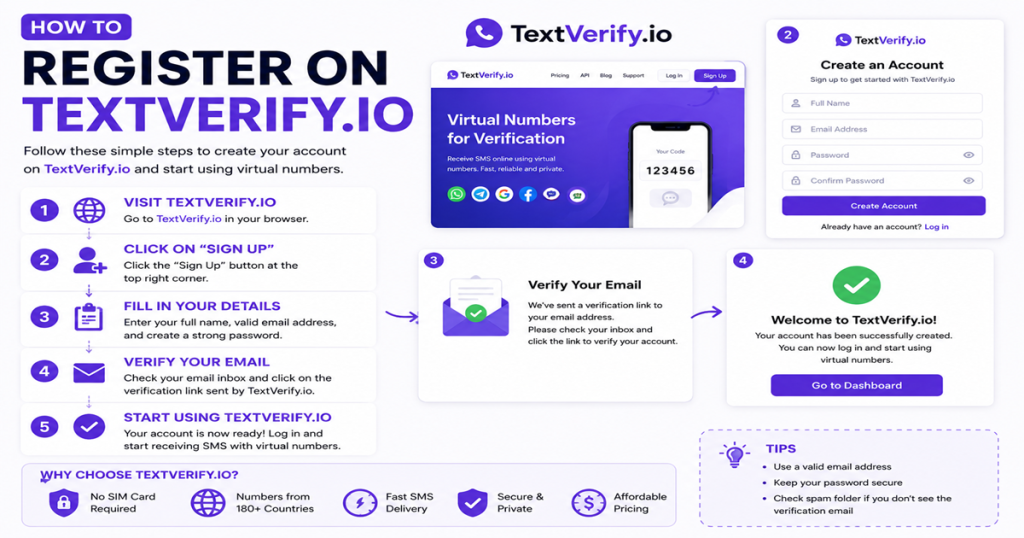
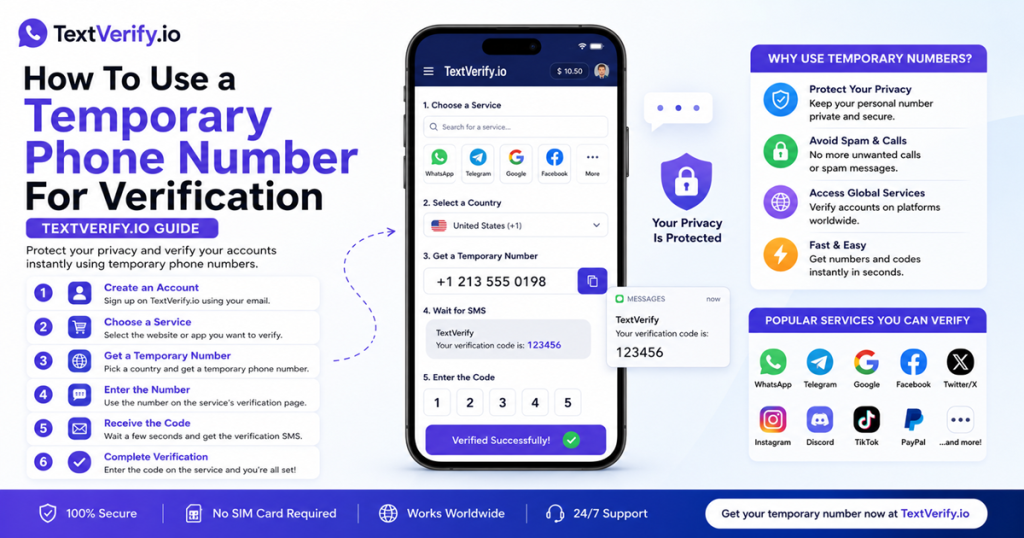
Step-by-Step Guide
Create a Remitly account without your personal phone number:
Common Mistakes to Avoid
- Using a VoIP number. Remitly’s carrier check blocks VoIP and internet-routed numbers before dispatching any OTP. Only a real US carrier number from TextVerify passes consistently on a licensed remittance platform like Remitly.
- Using a public SMS inbox. A shared public inbox exposes your Remitly verification code to anyone online — a serious risk on an account linked to bank accounts and cards used to fund international money transfers.
- Not having your TextVerify inbox open before clicking Send code. Remitly OTPs expire within minutes. Have your inbox tab ready before submitting the number so you can copy and enter the code immediately when it arrives.
- Assuming phone verification alone covers all transfer amounts and corridors. Remitly may require additional identity documentation for larger transfers or specific corridors, as required by MSB regulations. Phone verification covers the account registration step; some transfer amounts or corridors may prompt government ID verification before the transfer is processed.
- Sending to an incorrect account or mobile wallet. International money transfers on Remitly are typically irreversible once dispatched. Verify recipient details carefully — name, bank account, mobile wallet, or cash pickup details — before confirming any transfer, as errors are difficult to correct after the transfer is processed.
Frequently Asked Questions
Bottom line
Remitly blocks VoIP numbers at carrier validation before sending any OTP. TextVerify.io provides real US carrier numbers that pass this check. Enter the TextVerify number at registration, copy the OTP from your private inbox, and your Remitly account is active — with your personal number never shared with the platform.
TextVerify.io
✈ Verify Remitly Without Your Personal Number
Real non-VoIP US numbers · Passes Remitly’s carrier check · Private inbox only you can access
Get Started on TextVerify.io →